Monday, 10 February 2014

Economic lessons from the sixties, still true today

Two quotes from great men speaking in the 1960s about economic injustice. Both could have been written today. Have we come so short a distance in almost 50 years?

Here's Martin Luther King, in a sermon at Ebenezer Baptist Church, Atlanta, Georgia, on 4 July 1965:
This is why we must join the war against poverty and believe in the dignity of all work. What makes a job menial? I’m tired of this stuff about menial labor. What makes it menial is that we don’t pay folk anything. Give somebody a job and pay them some money so they can live and educate their children and buy a home and have the basic necessities of life. And no matter what the job is it takes on dignity.
And George Macleod, founder of the Iona Community, talking to the Church of Scotland's General Assembly in 1968:
By all means let [them] call on the people of Britain to work hard to make sacrifices. But youth will increasingly ask: ‘For whom the work, and for whom the sacrifices?’ Is the whole world of global labour just to go on doing just that for the benefit of indifferent Mammon? It is urgent that the whole issue of international monetary finance be independently reviewed.

Sunday, 9 February 2014

Taste and See: a sermon on salt and light

Sermon preached at Duston United Reformed Church, 9 February 2014. Text: Matthew 5:13-20.

The psalmist wrote: “O taste and see that the Lord is good; happy are those who take refuge in him.” And today I’m going to talk about salt and light, the way we enable others to taste and see Jesus in our lives.

A couple of years ago, we were due to drive up to Scotland for Christmas. We hadn’t finished off all the work needing doing, and we were all a bit poorly, so we postponed the journey by a day. The next morning came, and it was snowing heavily. But we were committed to going, and the car was packed, so we set off. It was slow driving, the visibility was poor, and the roads were in danger of becoming icy. We were protected by two things: the lights of our car and those of other cars around us; and the salt which had been put down on the road. Light and salt. Salt and light.

They’re familiar, everyday things. Yet they’re also metaphors, images that help us understand a particular way of being followers of Jesus. Given the winter we’ve had this year, I’ve been reflecting this week what it would mean to be umbrellas and sandbags to the world!

The trouble with metaphors is that they become an end in themselves. And the trouble with these two metaphors, about salt and light, is that they get taken out of context. Here’s a diagram about what happens when you take bits of the Bible out of context. Last Sunday at the evening service, we heard Micah’s words about seeking justice, loving mercy and walking humbly with our God. That verse is often quoted by itself, with all the rest of Micah – good solid destruction-and-repentance OT prophet stuff – being ignored.

So it is with this passage. It’s really important not to take it in isolation, but to see it in its context. The text we’ve just heard is sandwiched between two much longer chunks of the Sermon on the Mount. First comes the Beatitudes, Jesus’ great teaching on who would be blessed in the kingdom of God. And after it comes a whole series of moral teachings, on themes such as murder, adultery, divorce, violence, and love for neighbours. In each of these teachings, Jesus begins by saying “you have heard it said” and gives the usual account from the Jewish law, and then follows it with “but I say to you” and presents a really radical reinterpretation of the law. So what Jesus has to say about coming to fulfil the law not abolish it is a very important introduction.

The keeping of the law of Moses, the Torah, was absolutely central to Jewish identity (and still is). Jesus says that his followers – that our – righteousness must exceed that of the scribes and the Pharisees. The poor old Pharisees have a bad press now, but they were hugely respected in Jesus’ day. They were righteous people, they lived upright and decent lives and encouraged others to do the same. The problem was that they didn’t always match up to their own aspirations. It’s a familiar enough image from our own times – those who do all the right things outwardly, but inwardly know they’re just doing it for appearances.

Because Jesus has a different way of treating the law. It’s no longer about outward appearance. It’s about what we do inside our hearts, how we live out the law within ourselves. In later times, we talk about this as receiving the Holy Spirit, or as the Inner Light of Christ, but when Jesus was preaching the Sermon on the Mount, he showed again and again that what was needed was to take the law within ourselves, to write it on our hearts, to live it day by day. To be more righteous and less self-righteous, more concerned with deeds and less with rules.

And Jesus gives his disciples, gives us today, these two clear images of what it means to be his disciples. He says that we are the salt of the earth, and that we are the light of the world. These are big statements, which might seem quite daunting. Salt had a big spiritual significance – it was seen as divine by the Greeks, a symbol of purity to the Romans, and was mandated for the Israelites both as part of their sacrifices to Yahweh and as a seal of covenants of friendship. And light – well Jesus is called the light of the world, who shines light in our darkness, many times in the gospels, especially in the gospel of John. I think I’ve shown this picture before here – for me it bursts with light and life. So for Jesus to give this title to his disciples is a big statement.

Notice that he doesn’t order us to be these things, he doesn’t do “thou shalt”, he doesn’t even say it’s better if we’re salt & light than not. He says that we are salt, that we are light – that by living in his way, those who follow him are salt of the earth and light of the world. It’s worth pointing out – and I don’t think this is just nit-picking – that the “you” in the Greek is plural both times. We are called to be salt and light in community. We are called to a common enterprise of shared discipleship, to act together as disciples to make the world better.

Let’s look a little bit more about the images, and why they matter. First, salt. Here’s the most obvious connection with salt in Jesus’ time: food. It must be lunchtime soon! In the ancient world, salt acted as flavouring and as preservative. It made food worth eating, and it kept it fresh. Then as now, salt’s flavour works best in moderation – too much and it overpowers the food. But I love the idea of Christians being called to give flavour to life. Jesus said that he came that we might have life, and have it in abundance. Too often, the public idea of Christianity is of rather serious people. The writer Robert Louis Stevenson once recorded in his diary, as if it were a rare event: “I have been to Church to-day, and am not depressed”. But we are a people who know joy through following Jesus, through his life and his example and his sacrifice. We can give flavour to the world, bring hope to others through our actions to help them and through the lives we lead. The URC’s own John Proctor, who teaches at Westminster College, compares salt and honey, and writes that “there is an honest tang about wholesome Christian integrity: salt is clean, rather than cosy, whereas honey coats everything, however sour and rough, with the same artificial film of sweetness. Trying to be all things to all people can strain us beyond credibility. Being ourselves, where we are and as we are, is what Jesus asks of us.” We’re talking about salt and light, not sweetness and light.

And in this way, Jesus’ calling us to be light to the world carries a similar message. Light is not always comfortable or easy – it can be a searchlight just as much as a gentle candle – but it shows up what is to be found in dark places, and it’s the very stuff of life. Every bit of life on the planet, ultimately, comes from sunlight. So being called to be light is powerful calling. Again it’s about hope. The founder of the Iona Community, George Macleod, wrote the following: “Follow the light you have, and pray for more light”. We have a great deal of light, individually and together. It’s sometimes easy to forget about it, but we can be radiant with light. Even if it feels hard, the light of Christ is waiting within us, and if we nurture it, more will be given to us.

One last thing. Jesus talks about us falling short from this great calling. He’s not suggesting that this is sinful or inevitable, but that we will become less useful as disciples. The salt of his time was often rock salt, typically gathered from the edges of the Dead Sea, roughly the same stuff as we put on roads in winter. If the salt was washed out of it, all that was left was rock. And of course he talked about the foolishness of putting a lamp under a bushel basket, which at best would hide the light and at worst start a nasty fire! If being salt and light are ways that Jesus wanted us to think of ourselves as disciples, then he was warning us that it wasn’t inevitable that we’d stay that way. Because we do lose flavour, we do risk becoming bland; and we too often don’t let our light shine. But Jesus offers us the opportunity to do so.

I’m going to end with a prayer from a writer called Peggy de Cuehlo from Uruguay:

You placed me in the world to be its salt.
I was afraid of committing myself,
Afraid of being stained by the world.
You placed me in the world to be its light.
I was afraid of the shadows
And my light slowly faded away.
You placed me in the world to live in community.
Thus you taught me to love,
To share in life,
To struggle for bread and for justice,
Your truth incarnate in my life.
So be it, Jesus.

Tuesday, 28 January 2014

What are you looking for?

Sermon preached at Duston United Reformed Church, 19 Jan 2014. Text: John 1:29-42.

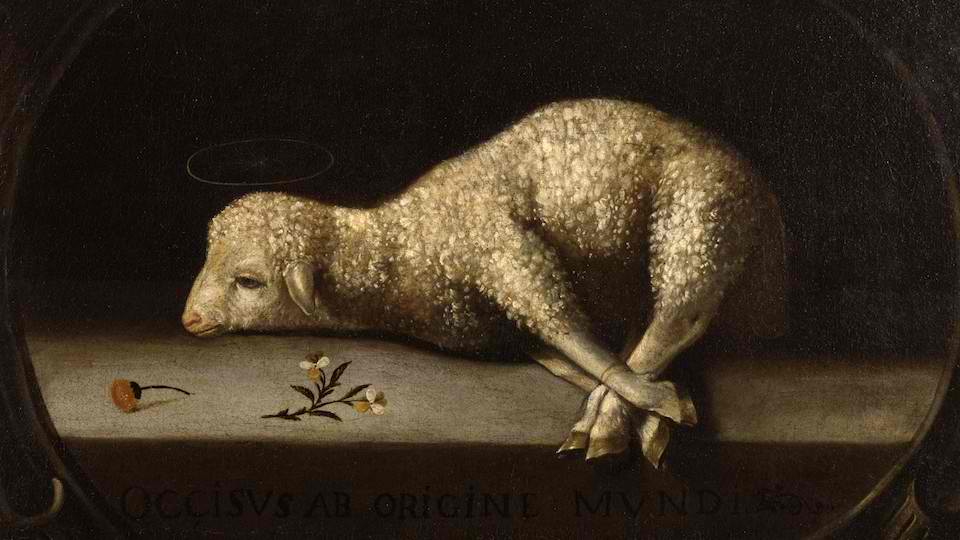
“What are you looking for?” It’s the first words we hear from Jesus in John’s gospel. Up until that point he’s been talked about, as the eternal Word of God and then as the one who John the Baptist is talking about. It’s a challenge to the disciples of John the Baptist, and it changes their lives. And it’s a challenge to us too. We’ll come back to that, but just now I want to talk about the Lamb of God. 

One of my great pleasures in life is singing in choirs. I sang in my first classical concert when I was 20, and got hooked. So I tend to have lots of tunes in my head at any time – it’s what some people call earworms. And this week, since I’ve started thinking about this passage, I’ve had at least two settings of the words of John the Baptist that it begins with: “Behold the Lamb of God who takes away the sin of the world”. It’s a vivid image, and it’s one of the key prayers of the Catholic Mass and also the Requiem Mass, so it’s been set to music by many different composers, especially in its Latin text: “Agnus Dei, qui tollit peccata mundi”. And if you have any interest in classical music, or ever listen to Classic FM, your head might now be running through at least one version of that text! The one that especially has been in my head is a modern setting, written at the turn of the millennium by Karl Jenkins, part of his piece called “The Armed Man: A Mass for Peace”. I sang it ten years ago. I listened to the Agnus Dei a few days ago and had goose-bumps down my spine. It’s music that has real power to it, because it derives from an image with real power.

“Here is the Lamb of God, who takes away the sin of the world.” The instant John sees Jesus, it’s what he says to his disciples, even before he baptises Jesus and sees the Spirit descending and hears the voice from heaven. And John says it again when he sees Jesus the next day. Indeed, we don’t hear another word from John the Baptist in this gospel. For him and the gospel writer, it’s clearly a crucial image. And if you look at many of the traditional paintings of John the Baptist, he appears with a lamb beside him.

So what did John mean by referring to Jesus as the lamb of God? For such a resonant phrase, it’s amazing that it appears in precisely only two verses in the Bible, both in this chapter. But the idea of a lamb is present through the Bible, both old and new. And there’s lots of ways of interpreting the phrase. I want to talk about two.

First, the Passover lamb. In the book of Exodus, the people of Israel are told to slaughter a lamb and roast it over a fire, and then to smear the blood on their doorposts. It is the sign of the blood which tells the Angel of Death to pass over them, to save their children. It’s a gruesome story and a gruesome image, but one that was and remains central to Jewish identity as a people rescued by God. The Passover celebrations were a few days after the baptism of Jesus, and so the slaughter of lambs would have been in John’s mind. So one way in which Jesus could be said to be the Lamb of God is in his sacrifice. And of course related to that were the images that the prophets had, such as the suffering servant being led as a “lamb to the slaughter” in Isaiah.

Second, the victorious lamb. In the time of the Maccabees, around a hundred and fifty years before John baptised Jesus, lambs were a symbol of conquerors. A lamb with horns was a sign of power and strength, not of weakness and sacrifice. There’s a lot about the victorious lamb in the book of Revelation, such as the great hymn which Handel used at the end of Messiah, ‘Worthy is the Lamb that was slain to receive power, and riches, and wisdom, and strength, and honour, and glory, and blessing’. So as much as the image of the lamb is about sacrifice, it’s also about power and victory, hence the picture of the lamb & the flag.

But there’s more in these short words. John not only calls Jesus the lamb of God but also says that he takes away the sin of the world. There’s a lot about sin in the gospels, but Jesus only said he was forgiving sins in a few places. One of the most prominent was the healing of the paralytic man at Capernaum who was let down through the ceiling. Before Jesus healed him, he first of all said “your sins are forgiven”, and it was that which shocked the Pharisees much more than the actual healing. And the gospel of Matthew records that at the last supper, which we will be remembering in communion later, he said that the wine was the “blood of the covenant, which is poured out for many for the forgiveness of sins”. So we can see Jesus forgiving sins both during his life and through his death. And the Agnus Dei was originally written as a prayer to be said while communion was being celebrated – as the priest broke the bread, the people spoke or sung the words over and over until all the bread was distributed.

The second time Jesus is introduced by John the Baptist as the lamb of God, John has two of his disciples with him. And as I said earlier, Jesus said some words to them that just as well could be addressed to us: “what are you looking for?” It’s a challenge to them. They’re clearly seeking for something, but what is it? Are they just going for one interesting figure to another, or are they really looking for truth? And Jesus had a lot of conversations with different people during his public ministry, and some of them had pretty strong agendas. So Jesus is asking the disciples of John: what is your agenda? Why are you here? What are you looking for in life?

It’s a question that Jesus could be asking each one of us just as well. What are we looking for? And it’s an open question too. It’s not a trick question, with a single right answer. Jesus came to people where they were, and taught them and healed them and led them to God where they were. The gospel of John is full of vivid images along with the lamb of God – the light of the world, the bread of life, the vine and the branches – and these reflect different ways that different people found what they were looking for in Jesus. But all of them had to be authentically themselves, to allow Jesus to see them authentically and to listen to him fully. They call him Rabbi, but in Jesus’ day, Rabbis – highly respected public teachers – didn’t go out seeking for the followers, the followers came to them.

And that’s what the disciples do. They want to know where Jesus is staying, and ask him. And Jesus says, “Come and see”. So they go to the place Jesus was staying, and they remained there with him. The word in the Greek is exactly the same as that which is translated as “abide” later in John’s gospel where Jesus says he is the vine and his disciples are the branches and over and over he says they must abide in him, they must remain with him. It’s not an easy journey, and many of them suffer for it, but it changes them completely. At the end of the reading we meet Simon, brother of Andrew, for the first time. He was transformed from a simple fisherman to the centre of a new movement by this encounter, and Jesus even gave him a new name – Cephas or in Greek Peter, which means ‘rock’ and as some people have commented is a bit like saying your new friend who’s quite big and burly should be called ‘Rocky’.

On and off the past couple of months I’ve been reading a book by an American pastor, John Ortberg, by the title “Who is this man?”  It’s a question to wrestle with. Who is Jesus for us? What are we looking for when we seek him? Here’s what John Ortberg says (in a different book) about being a follower of Jesus:
The decision to grow always involves a choice between risk and comfort. This means that to be a follower of Jesus you must renounce comfort as the ultimate value of your life.

The disciples must trust in him, and follow him. Do we have the courage to do the same? And can we ask ourselves what that would truly mean in our lives right now?

What are you looking for?


Friday, 20 December 2013

Born with no dignity

An important reminder at the time of tinsel and over-consumption as to the nature of the one whose birthday we celebrate on 25th December:
He entered the world with no dignity. 
He would have been known as a mamzer, a child whose parents were not married. All languages have a word for mamzer, and all of them are ugly. His cradle was a feeding trough. His nursery mates had four legs. He was wrapped in rags. He was born in a cave, targeted for death, raised on the run. 
He would die with even less dignity: convicted, beaten, bleeding, abandoned, naked, shamed. He had no status. Dignity on the level of a king is the last word you would associate with Jesus.
John Ortberg (2012), Who Is This Man?

Tuesday, 12 November 2013

Movember: emodiment, incarnation and denying the body

So it's Movember. Or at least, it's November. And this year (for the first time) I'm growing a Mo. Years ago, I had a moustache and full beard, but eventually I shaved it off and have been quite happy with that. So why am I sporting facial hair again (for one month only)?

It's all to do with the male body, and my personal attitudes to the body. I've spent quite a big part of my life being afraid of human bodies. As a teenager, the Latin tag "sana mens, in corpore sano" (a healthy mind in a healthy body) filled me with horror. I ate and exercised well enough, but why what seemed liked the core part of me (my mind) have to be shackled to an unreliable bag of bones, skin and blood? My first beard growth, around age 23, was partly an attempt to hide myself. Since then, I've married and had children; I cook, clean, have changed upteen nappies - to some extent I've come to terms with bodies. But that early view hasn't quite left me.

In the mean time, I've become very interested in theories of embodiment. In my working life, I've written on and off about the way that information is embodied (I have often quoted Katherine Hayles' view that in early cybernetics, "information lost its body") as well as on cyborgs, those transgressive mixtures of the technical and the physical. In my religious life, I frequently describe myself as having an incarnational faith (focused on the Christian belief that God became human at a particular time in a particular place, leading us to likewise focus on our own time and place), and I am increasingly interested in incarnational mission.

And the combination is more than a little bit hypocritical: to be a creature of the mind, but deeply interested in embodiment and incarnation. Of course, I'd hardly be the first man to have this particular discordance: many men are bad at their bodies. And that's why Movember is particularly striking: it's about men being just a little bit aware of their bodies, by doing something that men can do as men, and in the process also raising awareness of the diseases that specifically affect men. So this month I'm forcing myself to be a bit more aware of my body and the things it does. Maybe it'll have a longer-lasting effect.

Sunday, 3 November 2013

Seeking justice: the worship God wants from us

Sermon preached at Duston United Reformed Church, 3rd November 2013. Text: Isaiah 1:10-18.


What’s the point of worship? What does God want from us when we worship? Why do we gather week after week in this and other places? The passage here raises these questions, and it suggests ultimately that what matters is not how you worship, how fine and noble are your words and songs and rituals, but the result of that worship, what you actually do as a result. So I’m here to give my first sermon at Duston & I want to start by talking about a passage where God says how much he dislikes traditional forms of worship. Perhaps a bit risky? Well maybe, or maybe not.

Isaiah presents us with some pretty angry words, quite appropriate for the time around Fireworks Night. At a first reading, once you’ve recovered a bit from the smoke and the bangs, you might wonder who he’s aiming at here. What kind of worship is God (via Isaiah) so angrily disclaiming?

First go: he’s talking about the ritual practices of a particular people at a particular time. One of the curiosities about the book of Isaiah is that we can’t really pinpoint which parts were written when – biblical scholars often talk about First Isaiah, Second Isaiah and Third Isaiah, and generally it’s supposed that this early part of the book was written in the 8th century before Christ. However, other scholars argue differently, and regard the first chapter as an introduction, a kind of overture which summarises the main themes of the later work, written much later. So it’s hard to be sure exactly who the author is aiming his fireworks at. But it’s clear from the context of earlier verses that he’s writing to the people of Jerusalem, and we know that the temple culture of Jerusalem involved plenty of the things mentioned here – burnt offering, sacrifices, sabbaths, festivals and so on.

So is Isaiah just talking to the people of the time? Can we safely sit back and say, like the Pharisee in Jesus’ parable, “God, I thank you that I am not like them”? Surely not. The amazing thing about the Old Testament prophets is that, almost 3000 years after they spoke and wrote, God’s voice in them shines through loud and clear today. The message is not just for those long-ago folks in the Middle East with their funny practices, the message is for us here, today, now.

The version of parts of this passage in The Message makes this really clear. It says:
Quit your worship charades.
    I can’t stand your trivial religious games:
Monthly conferences, weekly Sabbaths, special meetings—
    meetings, meetings, meetings—I can’t stand one more!
Meetings for this, meetings for that. I hate them!
    You’ve worn me out!
I’m sick of your religion, religion, religion,
    while you go right on sinning.
When you put on your next prayer-performance,
    I’ll be looking the other way.
No matter how long or loud or often you pray,
    I’ll not be listening.

It’s not hard to see that passage in terms of Sunday worship, harvest festivals, nativity plays and church meetings!

OK, next attempt to soften the blow. Various Protestant theologians down the ages have read this passage and said something like “oh, that’s ok, he was talking about elaborate rituals, full of pomp and nonsense. It’s the stuff the Catholics do, it’s not our problem. Here we do simple, Godly, prayer and reading of the scriptures.”  There are two immediate problems with this defence, and one bigger problem still. First, it’s immediately shattered by verse 15, which says that “even though you make many prayers, I will not listen” – the rejection is just as much of quiet prayer as it is of pomp. Second, we all perform rituals in our worship. We’re about to follow one – communion is a ritual meal after all – but there are ritual aspects, symbols and repetitions, at all points in any Christian act of worship. However simple our worship purports to be, it’s full of ritual. I knew an anthropologist once who had made a study of Quaker religious practices. Now Quakers are about as simplicity and pared-to-the-bone Puritan in their worship and buildings (even compared to most United Reformed Churches). But this anthropologist found that even Quakers have their rituals, their set patterns of behaviour that are repeated in their worship, and which they become fixated upon. It might be simple, but it’s ritual. It’s just the same, at the base, as sacrifices and new moons and solemn assemblies.

But this is still avoiding the point. Here’s what the prophet says is the real reason why God doesn’t want any of this stuff: it’s because the people doing the worship are missing the point completely. It’s because they get fixated on the details and fail to notice that their lives are completely at odds with what God wants from them. They have blood on their hands – literally or figuratively. Only by cleansing themselves of that blood will their worship be acceptable to God.

Let’s put that another way: WE have blood on OUR hands, and only by cleansing OURSELVES of that blood will OUR worship be acceptable to God. This is a hard message to hear, but I believe that it’s what Isaiah is saying to us.

Can we really be so terrible? Do we really have blood on our hands? Even if we do our best to avoid violence or war or conflict? Well I do. I live in a country which denies basic human rights to asylum seekers. My savings and pension contributions are invested in firms which exploit their workers across the world. I buy food which is traded and sold with no regard for those who produce it. I’m emitting vastly more carbon dioxide than the world can cope with. I care about these issues, and do my best in all these regards – I buy fair-trade, have an ethical bank account and green electricity. But frankly it’s not good enough. My individual actions, our collective actions of those of us here in this room, in this church, in this town, in this country – we all have blood on our hands.

So is our worship hateful to God? Surely not, because in the next verse the prophet gives us the answer: “Cease to do evil, learn to do good; seek justice, rescue the oppressed, defend the orphan, plead for the widow.”

Now, if you know some of the Old Testament prophets and what they said, you’ll realise that this is a common theme for many of them. Rescuing the oppressed group is what God calls us to do via many of the prophets. Much later in the book of Isaiah we find the passage which talks of proclaiming good news to the poor, binding up the broken-hearted, proclaiming freedom for the captives, and releasing from darkness for the prisoners, which Jesus read in Nazareth at the start of his ministry and which sets the tone for Luke’s account of Jesus’ mission. In Micah we have the famous invocation: “And what does the Lord require of you? To act justly and to love mercy  to walk humbly with your God”. And perhaps most poetically, the prophet Amos heard God saying:
I hate, I despise your religious festivals; your assemblies are a stench to me.
Even though you bring me burnt offerings and grain offerings, I will not accept them. Though you bring choice fellowship offerings, I will have no regard for them.

Away with the noise of your songs! I will not listen to the music of your harps.
But let justice roll on like a river, righteousness like a never-failing stream!

Nor is the call for justice simply found in the Old Testament prophets. It echoes throughout the New Testament. Jesus lived at every moment a life dedicated to living with those who society had cast aside and deemed unworthy – tax collectors, sinners, foreigners, women. He spoke of the blessed ones being those who were merciful, meek, peacemakers, persecuted. His vision of the kingdom was one that encompassed the small, that turned the hierarchies and injustices of the day on their heads.

We see this call clearly in the letter of James, who wrote:
What good is it, my brothers and sisters, if someone claims to have faith but has no deeds? Can such faith save them? Suppose a brother or a sister is without clothes and daily food. If one of you says to them, ‘Go in peace; keep warm and well fed,’ but does nothing about their physical needs, what good is it? In the same way, faith by itself, if it is not accompanied by action, is dead.

I’m not getting into the faith & works debate today, but all this says quite clearly to me that our worship is not enough if we focus just on ourselves, on our own little community, on our own salvation. These things matter, but what we do with our lives matters as well. Living a Christian life is not something that just happens on a Sunday morning; it suffuses every moment of every day.

So what does it actually mean to “seek justice, rescue the oppressed, defend the orphan, plead for the widow”? It’s going to differ for each one of us. Some of us are called to practical action, like volunteering at the food bank. Others are called to asking why food banks should exist, and seeking to change the system. Still others are called to neither, but to living their life in a way that makes justice possible. I don’t see that this call is tied to a particular political position, or particular lifestyle, or particular set of actions. There is so much injustice in the world. But I do think that the call is clear: our very best worship is pointless without an awareness of our impact upon the world in our daily lives.

Martin Luther King put it very well, as so often. He said that “the arc of the moral universe bends towards justice”. I want to say that phrase again, as it’s so striking: “the arc of the moral universe bends towards justice”. At the very heart of the universe – at God’s plan for creation – is justice.

One last example of this. The passage from Isaiah begins with a reference to Sodom and Gomorrah. Please don’t think this reference has any to do with sexual practices. As has often been said (not least by the prophet Ezekiel), the real sin of Sodom was a failure to welcome strangers properly, and a care for strangers is often added to the list of widows and orphans that Isaiah gives. The World Council of Churches has recently adopted an affirmation for faith leaders on Welcoming the Stranger, which was signed on behalf of the URC by our ecumenical relations officer, David Tatem. It includes the words:
A core value of my faith is to welcome the stranger, the refugee, the internally displaced, the other. I shall treat him or her as I would like to be treated. I will challenge others, even leaders in my faith community, to do the same. … I will welcome the  stranger. My faith teaches that compassion, mercy,  love and hospitality are for  everyone: the native born and  the foreign born, the member of my community and the newcomer. I will remember and remind members of my community that we are all considered strangers somewhere, that we should treat the stranger to our community as we would like to be treated, and challenge intolerance.”

This is just one example of seeking justice, but it’s an important one. And it’s only by seeking justice, in whatever area of life, that we come towards a pleasing form of worship.

There is one more thing to say. The passage set in the lectionary doesn’t end with the call to justice. It ends with a promise of hope – that while our sins may be scarlet, they will be made white as snow. This is not something we can achieve by ourselves. It needs God’s grace. It needs the inspiration and sacrifice of Jesus. It shows the openness that Jesus had towards Zacchaeus, and the good within him, as Simon showed us this morning. And it’s that grace which we share in at communion. We all fall short, in our worship and in our living, but with that grace we can know that we are loved by God. We are called to act in response, but we can act confident that we are starting from a safe place. There is fire in Isaiah’s call, but there is hope – for ourselves and for the world. Amen.

Worship resources on this blog

This year, I'm studying the course Gateways into Worship, part of the programme Training for Learning and Serving (TLS) of the United Reformed Church. A key part of the course is practical: spending a substantial placement in a church, leading some or all of several services of worship. I'm spending my placement at Duston URC. I'll be uploading various of the worship resources from the year to this blog. This is the first sermon I preached there. Most of my texts will be chosen from the Revised Common Lectionary.

The Year of Jane: or, a personal account of my first time reading through all the novels of one of the greatest novelists

I never read Jane Austen as a teenager. I was a voracious reader, but a lot of it was sci-fi & fantasy, I found nineteenth-century ficti...